


Lash Room Furniture: Everything to Buy, What to Skip, and Why It Matters
Setting up a lash room for the first time — or resetting one that isn't working — comes down to one decision made well and a series of smaller decisions that follow.
Most lash artists get this backwards. They spread their budget evenly across a dozen purchases and end up with a room that functions but never stands out. The bed is mediocre, the stool creates back pain by noon, and the room photographs well enough to post but not well enough to book from.
Here is how to prioritize correctly.
The Furniture That Actually Matters
Your lash room has one piece of furniture that every client interacts with, that appears in every photo you take, and that determines whether clients stay still for a 90-minute set. It is the bed.
Everything else in the room — the cart, the lighting, the décor — is secondary. None of those things affect whether a client comes back or refers a friend the way the bed does. A client who is comfortable for 90 minutes talks about it. A client who subtly shifts throughout the service because the bed is flat and firm does not give you a five-star review about how comfortable they were.
Invest the majority of your furniture budget here. Everything else can be upgraded incrementally. The bed sets the floor for everything.
What To Look For In A Lash Bed
Most lash artists start the search in the same place — massage tables, mid-range import beds, and whatever comes up in a search for "lash bed." Here is an honest breakdown of what each option actually means.
A massage table is not designed for lash work. The leg placement supports a therapist standing alongside the client — not an artist sitting at the head, working at close range above the face for an hour and a half. That positioning mismatch causes real strain accumulating over years of practice. Beyond ergonomics: massage tables require sheets and bolsters to be usable for lash clients. The laundry is relentless. The setup never looks polished.
An imported spa bed priced at $2,500 to $3,500 sounds like a professional upgrade. But the economics of imports work against you. When you pay $3,000 for a bed shipped from overseas, a large portion of that cost goes to ocean freight, warehousing, and supply chain management — not the product. The bed itself is a fraction of what you spent. You are funding logistics, not quality.
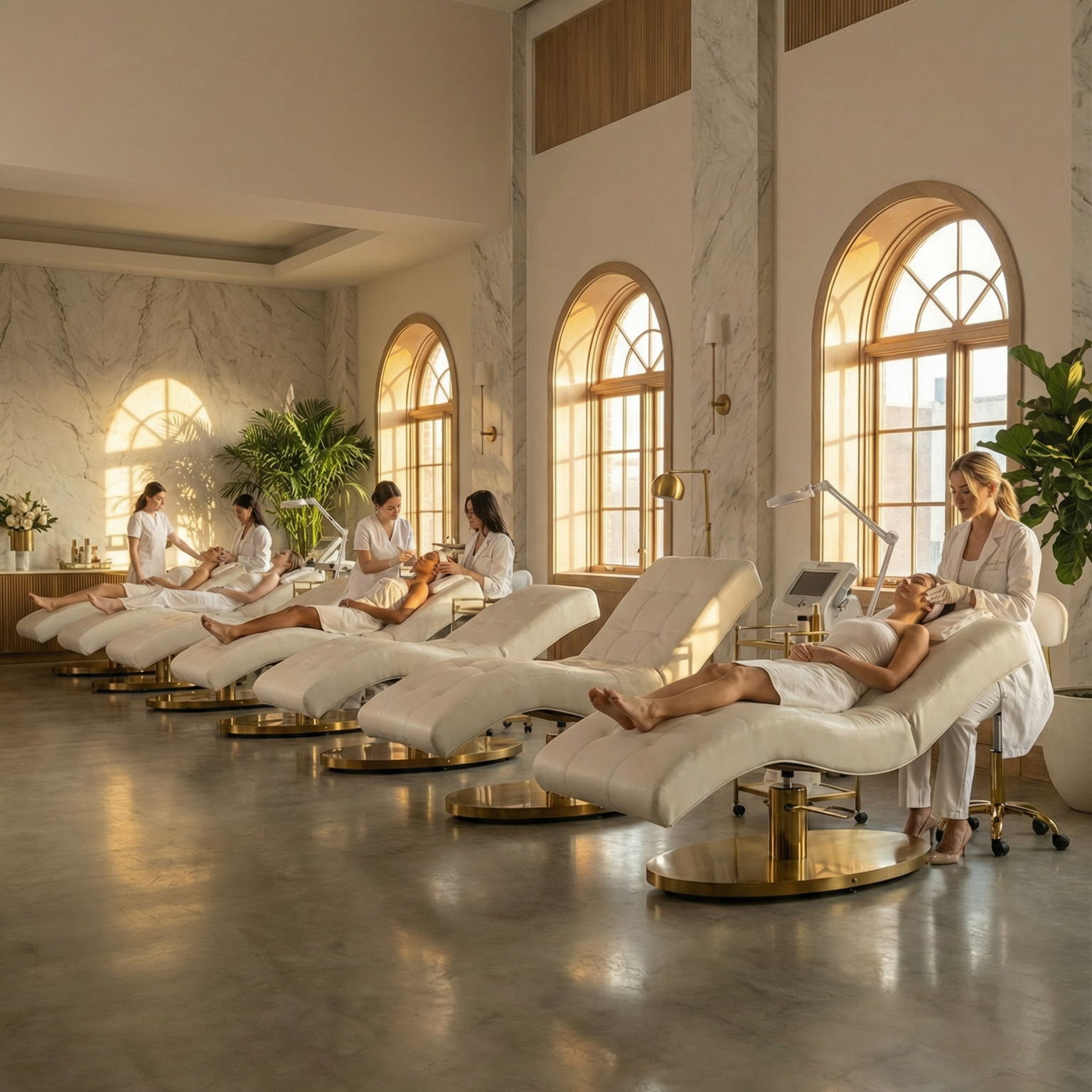
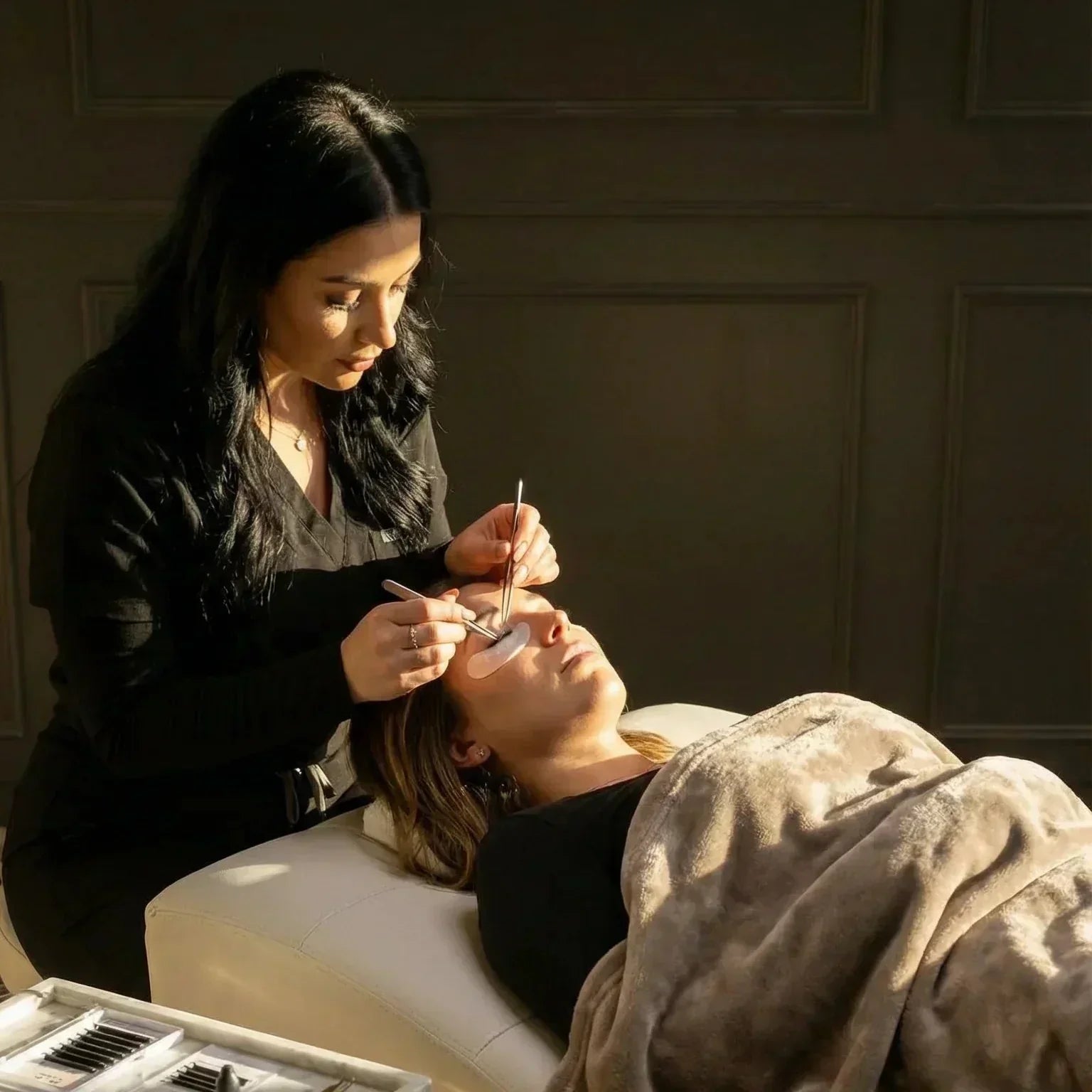
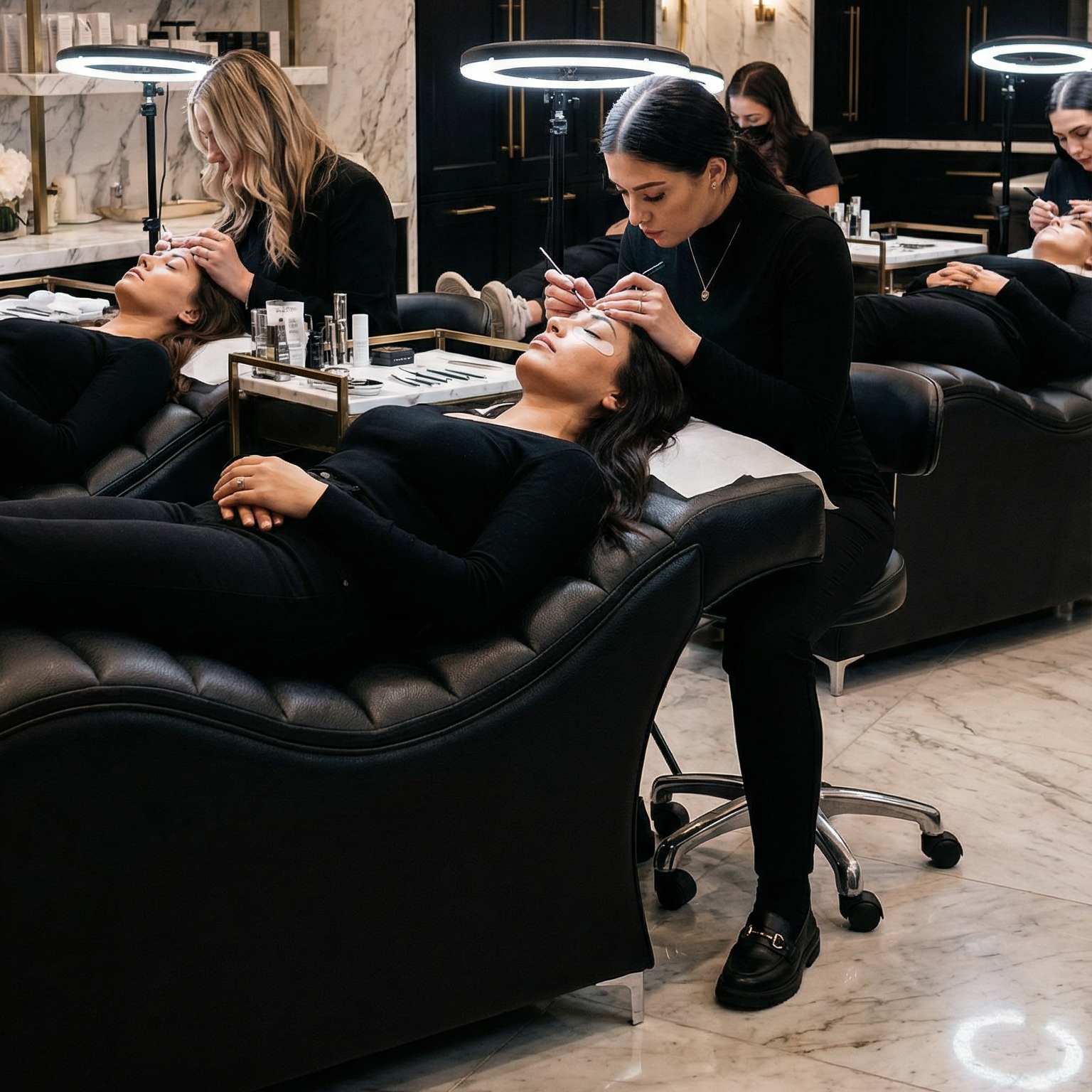
A Plush + Oak bed — the Edda Cloud or the Brynn — is built for the work lash artists actually do. The leg structure is open at the head of the bed, so you can sit comfortably in the position you actually work in rather than fighting the furniture. The anti-gravity ergonomic curve cradles the client naturally, which matters more than most artists realize: a client whose body is fully supported lies still. A client who is not supported subtly adjusts throughout the service.
Under the foam is a full tensile webbed suspension system — not plywood. The foam sits on woven tensile webbing that flexes and breathes, suspending the client rather than pressing them against a hard base. It feels springy, like quality furniture, because it is built like quality furniture. After years of heavy use, it still feels the same. Foam on plywood compresses and flattens. Foam on tensile suspension does not.
Every Plush + Oak bed is made to order. You choose the color. Not from three stock options — from a real range that lets the bed become part of your room's aesthetic rather than a generic piece of equipment dropped into it.
Which Plush + Oak Bed For Lash Work
For most lash artists, the Edda Cloud or the Brynn is the right choice. Both feature the deep anti-gravity curve and open leg clearance that lash work requires. They come standard with 4-inch legs — ideal for artists between roughly 5'2" and 5'10" — and are customizable to 2 or 6 inches if your height requires it.
If you want the option to adjust bed height without floor cords or mechanical complexity, the Vera 360 adds smooth hydraulic height control and a full 360-degree swivel locked with a foot pedal. If you occasionally need clients to sit partially upright, the Vera LOFT goes further — a clicker mechanism that takes the client from fully flat to a true 90-degree upright sit.
Add the Conversion Pillow if you want to accommodate the occasional stomach-lying client. Add the Curve Adjust Bolster if you work with shorter clients who need to be positioned closer to you.
The Second Priority: Your Stool
Most lash artists spend hours choosing a bed and minutes choosing a stool. Then they spend the next several years sitting on that stool for eight hours a day.
The stool you sit on is not a minor decision. It affects your posture, your lower back, your hips, and your longevity in a physically demanding profession. Generic stools and office chairs are designed for intermittent sitting, not for an artist who works in a fixed position — slightly forward, weight balanced, repositioning frequently — for hours at a stretch.
The Plush + Oak stool was designed specifically for beauty professionals. The open back eliminates tailbone compression, which is the most common source of chronic pain for artists who sit all day. A low back rest encourages upright posture without restricting movement. Silicone rollerblade wheels are silent on any floor type and let you reposition around the bed without interrupting the service.
Everything Else
Once you have the bed and the stool right, everything else in your lash room is secondary — important, but not load-bearing.
Your cart should be functional and organized. Clean, accessible storage communicates professionalism before you say a word. Cluttered surfaces undermine a beautiful room.
Lighting is a real investment. You need true-color lighting for your work — shadow is the enemy of lash precision. But your ambient room lighting can be softer and warmer; clients who walk into harsh white light feel clinical rather than cared for.
Ring lights are useful for content. They are not a substitute for proper overhead lighting during a service.
Décor, plants, and finishing touches round out the room. But they are the last ten percent of the impression your room makes — not the first. Get the bed right, get the stool right, then layer everything else.
The Numbers
More than 93% of Plush + Oak customers reported that their revenue increased after upgrading their furniture. 94% saw better client retention. 87% said the upgrade helped attract new clients. 68% saw their Instagram following grow after posting photos of their updated space.
The bed is infrastructure. It earns back what you put into it.
Visit plushandoak.com to configure the Edda Cloud, the Brynn, or the Vera — and to build the lash room that works as hard as you do.