



Article: How to Furnish a Salon Suite: Investment Guide
How to Furnish a Salon Suite: Investment Guide
How to Furnish a Salon Suite: The Smart Investment Guide
How to furnish a salon suite starts with a fundamental mindset shift: this isn't decorating your home. You're making a business investment. Every piece of furniture you buy should generate ROI through client retention, premium pricing, and referral attraction. A lash technician who invests $5,000 in a beautifully furnished suite will earn that back within 3–4 months through increased bookings and premium rates. A PMU artist with an intentional salon suite can justify $300–500 per service where a chaotic competitor charges $200. Furniture isn't an expense—it's equity in your business.
The question isn't "How much should I spend?" It's "What return do I need, and what investment justifies it?" This guide walks you through the priority order, the measurement process, the upholstery decisions, and the budget tiers. By the end, you'll know exactly what to buy, in what order, and what will move the needle for your business.
The Mindset Shift: Furniture as Business Investment
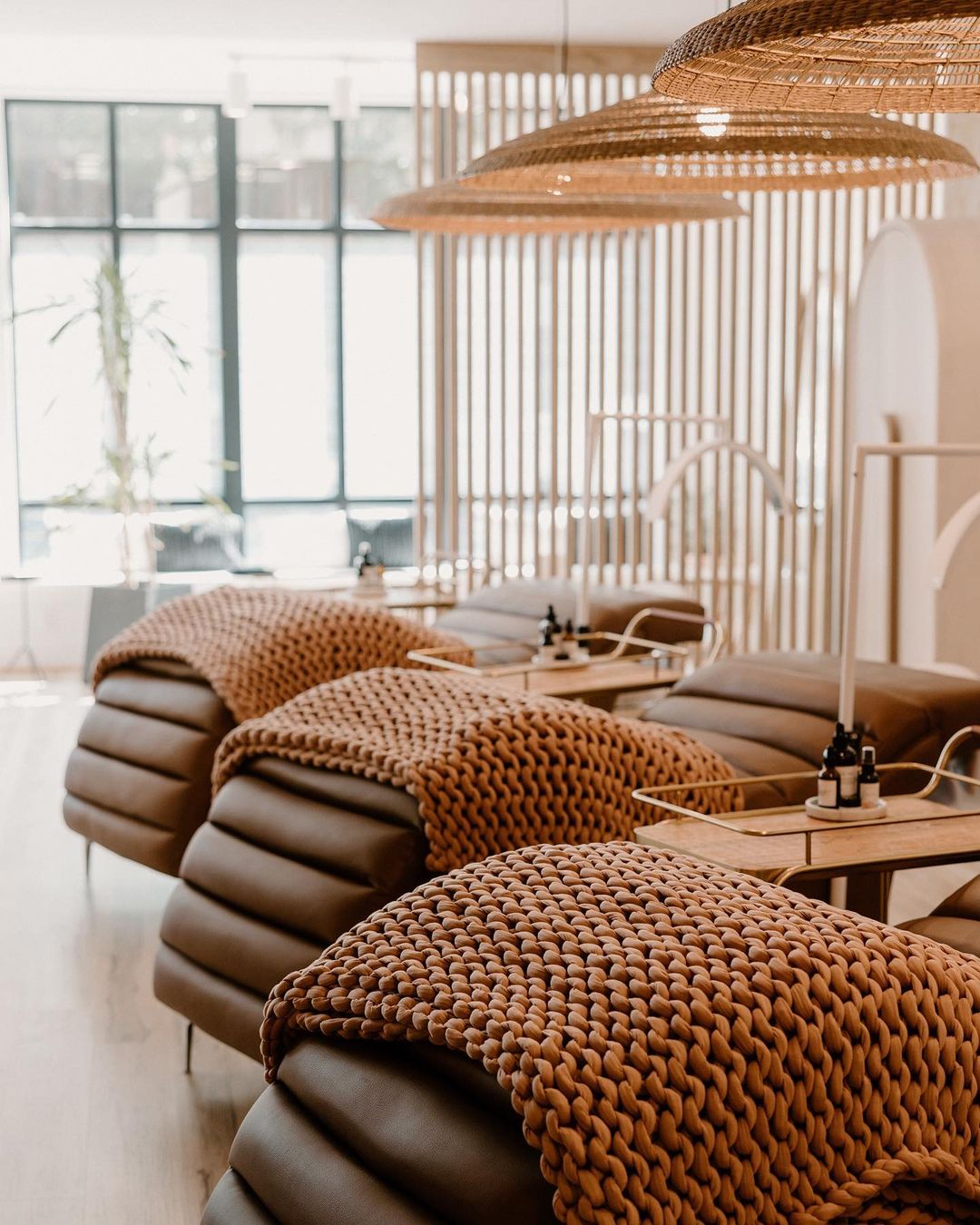
Your salon suite is your most visible business asset. Clients see it before they hire you. They base pricing expectations on it. They decide if you're a hobbyist or a professional based on the quality of your space. A well-furnished suite signals that you're serious, experienced, and worth premium rates.
Consider the ROI: A $2,000 lash bed that attracts premium clients and increases your booking rate by 20% pays for itself in 6–8 weeks. A $600 ergonomic stool that prevents back injuries extends your career by years. A $800 lighting system that makes your work look flawless increases your referrals. These aren't expenses—they're investments in your business longevity and profitability.
The difference between hobbyist and professional is often just intention. A professional invests in quality furniture, maintains it, and treats the space as a client experience, not a personal workspace. Clients sense that investment immediately. They respond by booking more, referring friends, and paying premium rates without negotiation.
Step 1: Map Your Service Menu to Your Furniture Needs
Different services require different furniture. A lash technician needs a fully reclined bed and excellent padding. A PMU artist needs a firm, adjustable bed and clinical brightness. An esthetician needs a facial bed with step-stool access. A massage therapist needs a sturdy massage table with adjustable height. A hair stylist needs a styling chair and excellent mirror lighting. A nail technician needs a low, sturdy manicure table. Your service determines your furniture priority.
Lash work: Lash bed (reclining, 4+ inch padding), professional stool (footrest essential), cart for supplies, warm task lighting, client seating.
PMU/Brow work: PMU bed (firm, adjustable height), professional stool (height control critical), trolley for supplies, bright task lighting (4500K minimum), excellent mirror with side lighting.
Esthetics: Facial bed (comfortable padding, step-stool access), stool, cart, soft ambient lighting, product display shelving, client consultation seating.
Massage: Massage table (sturdy, adjustable height), stool for consultation, soft ambient lighting, product shelf, client chair.
Hair: Styling chair (height adjustment, support), professional mirror with excellent lighting, product storage, client consultation seating.
Nail: Manicure table (low, sturdy), nail technician stool (foot rest, height control), organized polish display, product storage, client seating with arm support.
Identify your primary service first. That determines your primary furniture piece. Everything else supports it.
Step 2: Measure Before You Buy
Measure your salon suite space before purchasing a single piece. Standard salon suites are 100–200 sq ft, but dimensions vary wildly. You need: room length, width, and ceiling height; locations of doors, windows, and electrical outlets; any sloped ceilings, columns, or obstructions.
Create a floor plan. Use graph paper or a simple digital tool (even Google Slides works). Scale your room and map your primary furniture piece (bed, chair, table) as the focal point. Map your secondary pieces (stool, cart, mirrors, shelving) with clearance in mind. Allow 24–30 inches of walking space around your service furniture. The door should open fully without hitting furniture.
Traffic flow matters. Your client should be able to enter, move to the service chair or bed, and access the bathroom without navigating obstacles. Your workspace should have clear access from all sides so you can position yourself comfortably without reaching awkwardly. A cluttered floor plan will stress you both physically and psychologically.
Measure twice, buy once. Returning furniture costs time and money. Know your space's exact dimensions and obstructions before committing to purchases.
Step 3: The Furniture Priority Order for Budget-Constrained Artists
If you have limited budget, prioritize in this exact order. Don't skip to décor until these are covered.
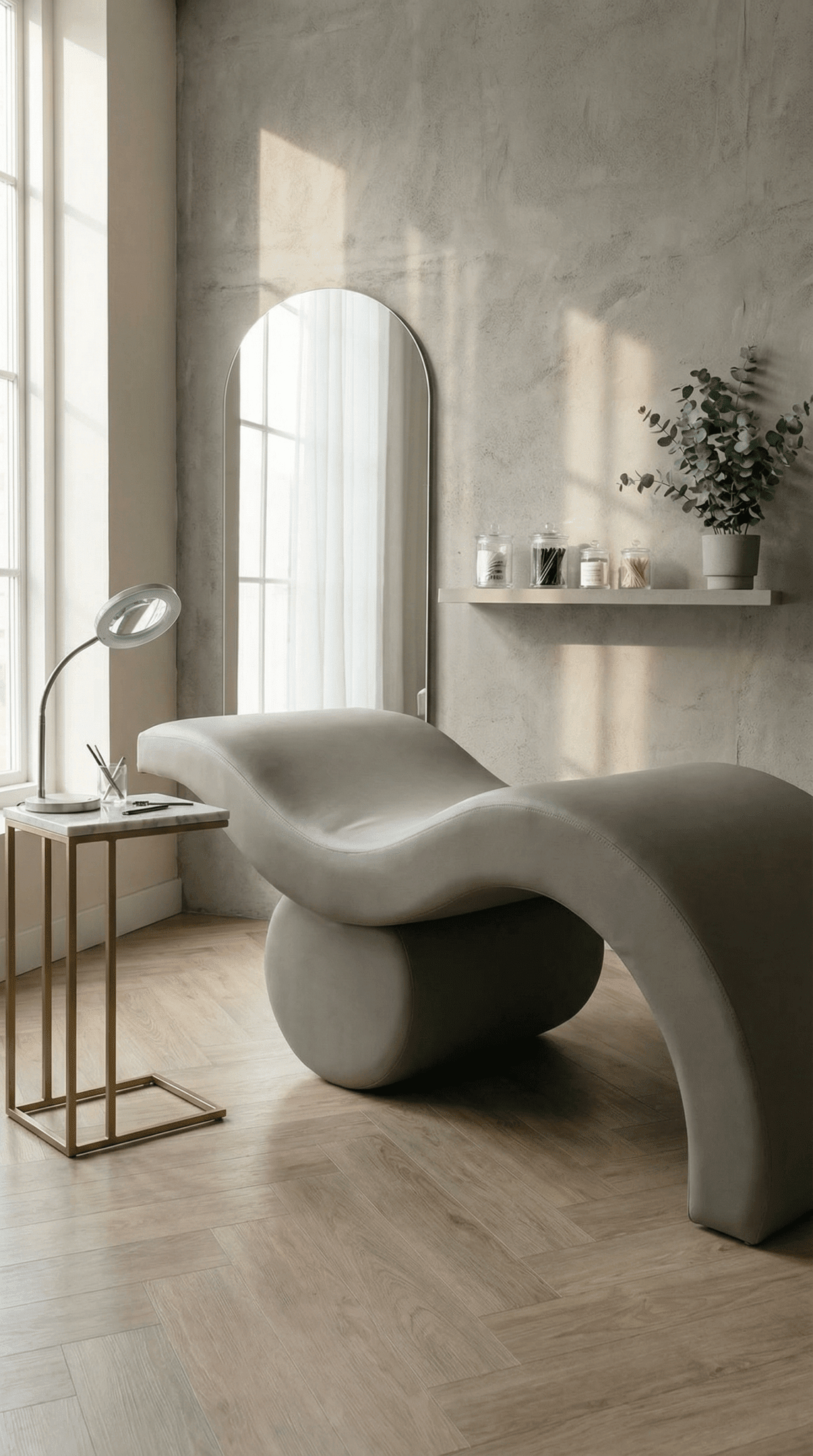
Priority 1: Primary Service Furniture
Your lash bed, PMU bed, facial bed, massage table, or styling chair. This is non-negotiable quality. Your clients sit or lie on this piece for hours. A cheap bed sags, upholstery wears, and clients notice immediately. Invest $1,200–3,000 here depending on your service. A lash technician or PMU artist uses this piece 6–8 hours daily. It needs to be excellent. Don't cut corners.
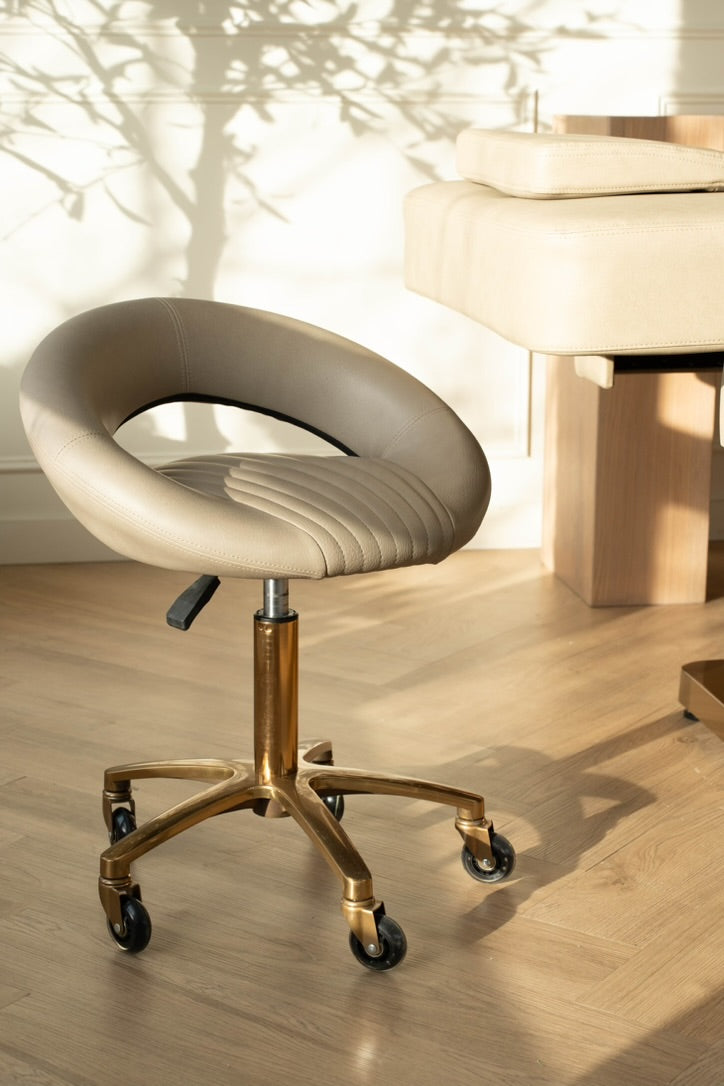
Priority 2: Ergonomic Artist Stool
Your physical health depends on this. A cheap, uncomfortable stool will cause chronic back, shoulder, and neck pain within months. Invest $300–800 in a gas-lift stool with lumbar support and a footrest. Your knees, hips, and spine will thank you. This is an investment in your career longevity, not comfort—it's essential.
Priority 3: Client Seating
A comfortable chair for consultation or waiting (if space allows). Budget $150–400. Clients who feel welcomed and comfortable are more likely to rebook. This isn't luxury—it's part of your service experience.
Priority 4: Storage and Supply Organization
A mobile trolley ($200–500), shelving ($200–500), or wall-mounted storage. Supplies need homes. Visible clutter looks unprofessional and stresses your workflow. Invest in organization before décor.
Priority 5: Task Lighting and Mirrors
Adequate task lighting ($150–500) and a functioning mirror are non-negotiable. Poor lighting makes your work look mediocre and strains your eyes. A mirror helps clients see results. These are tools of your trade, not décor.
Priority 6: Walls and Ambiance
Paint, wallpaper, or basic wall treatment ($200–800). Color transforms a space cheaply and impacts client psychology. This is where design happens.
Priority 7: Décor and Accessories
Only after essentials are covered. Plants, art, textiles, throw pillows, side tables. These enhance but don't replace foundation pieces.
If you're under budget, buy Priorities 1–5 over time rather than rushing to Priorities 6–7. A bare-bones room with excellent service furniture looks more professional than a decorated room with a cheap bed.
Step 4: What to Buy New vs. Secondhand
Buy new: Your primary service furniture (bed, chair, table), your stool, your task lighting. These pieces take the most wear and determine your professional output. Used beds often have stains, damaged upholstery, or worn padding. Used lighting may be dim or unreliable. New is worth it.
Source secondhand: Shelving, carts, side tables, décor, art, plants, throw pillows, rugs. Facebook Marketplace, Craigslist, estate sales, and thrift stores have quality pieces at 50–70% off retail. Savings here can be significant without compromising professional appearance.
Exception: High-quality secondhand service furniture from professional salon supply companies (if the piece was well-maintained) can work. Ask detailed questions about age, usage, condition, and history. If the padding is compressed or the upholstery is torn, pass.
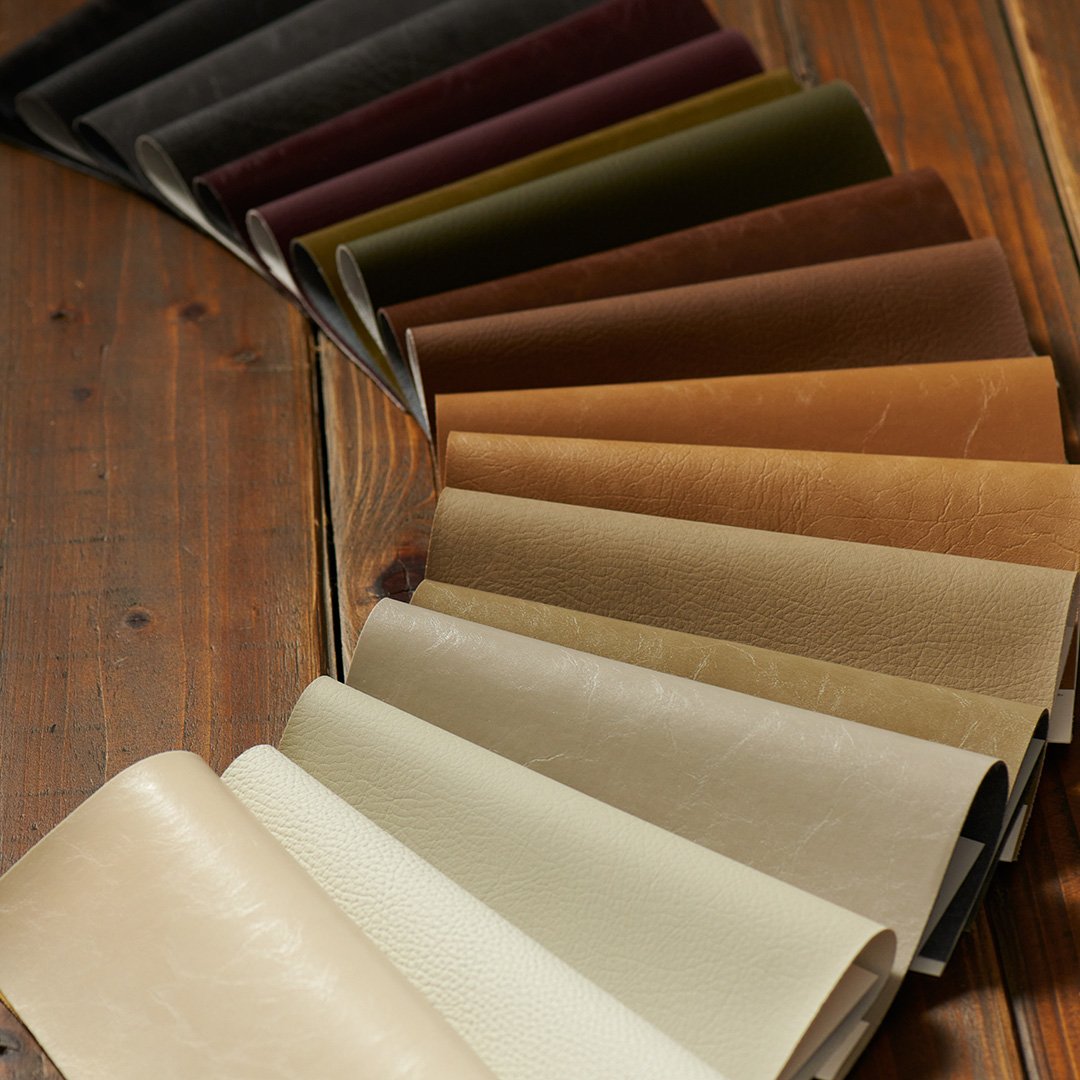
Step 5: Upholstery Guide—Matching Your Material to Your Service
Your salon suite furniture's upholstery must match your service's cleaning requirements and aesthetics.
Vinyl (PU Leather)
Best for: Lash, PMU, nail services. Shows zero stains, wipes clean in seconds, waterproof. Doesn't absorb sweat or product. Durability: 5–7 years with proper care. Aesthetic: Clinical, modern, easy-clean. Cost: Mid-range ($1,200–2,000 bed with vinyl).
Genuine Leather
Best for: PMU, brow, nail services where pristine appearance matters. Breathable, ages beautifully, professional appearance. Must be sealed and regularly conditioned. Durability: 7–10 years. Aesthetic: Luxury, upscale. Cost: High ($1,800–3,000 for leather bed).
Linen or Linen Blend
Best for: Esthetics, massage services. Breathable, soft, natural aesthetic. Shows stains easily; requires protective fabric guard. Durability: 4–6 years. Aesthetic: Warm, inviting, spa-like. Cost: Mid-range ($1,200–2,000).
Microsuede or Performance Fabric
Best for: Any service. Stain-resistant, soft, durable, variety of colors. Not breathable like linen, but easier to maintain than linen. Durability: 5–8 years. Aesthetic: Soft, modern, easy-care. Cost: Mid-range ($1,200–2,000).
Avoid: Cheap polyester blends, unprotected fabric, anything that shows every speck of dust. Your upholstery is part of your professional image.
Color Strategy
Light colors (cream, ivory, light gray, sand): Show stains, look premium, feel clinical. Best for PMU, brow, nail services. Requires protective sealing.
Dark colors (charcoal, black, navy): Hide stains, feel cozy, work for lash and massage. Easier to maintain. Professional but less "clean" aesthetic.
Mid-tones (warm taupe, warm gray, warm beige): Balanced. Hide stains better than light, feel less institutional than light, work for most services.
Choose based on your service and tolerance for stain visibility. A lash bed gets makeup, lash extensions, and eye makeup removed on it—dark or sealed light upholstery is smarter than unprotected light.
Step 6: Price Tiers—What You Get at Each Level
Budget Furnish: $1,500–$3,000
Primary piece: Entry-level quality bed ($1,000–1,500), basic gas-lift stool ($250–350), functional cart ($150–250), adequate task lighting ($100–200), basic mirror ($50–100), paint/wall prep ($200–400). Aesthetic is minimal—functional and clean. This works. Clients see professionalism. ROI comes from your technique. Growth requires upgrading to mid-range.
Smart Mid-Range: $3,000–$6,000
Primary piece: Quality bed with design ($1,500–2,000), good stool with lumbar support ($400–600), branded cart or shelving ($400–600), professional adjustable lighting ($300–500), styled mirror with frame ($150–300), paint or wallpaper ($300–600), accents and décor ($600–1,000). Your space signals investment. Clients feel welcomed. Premium pricing is justified. This is the tier where ROI accelerates—clients book more frequently and refer more readily.
Premium Investment: $6,000–$12,000+
Primary piece: Premium bed with designer upholstery ($2,000–3,500), luxury stool with memory foam ($600–1,000), high-end cart or custom shelving ($800–1,500), professional lighting system with controls ($500–1,000), statement mirror with detailed frame ($200–500), high-end wall treatment, wallpaper, or paint finish ($400–1,000), curated décor, art, textiles, plants, and design ($2,000–3,500+). Your suite is a destination. Clients feel they're in a luxury studio and don't question premium rates. Referrals increase significantly. This tier justifies itself through client acquisition and premium pricing within 4–6 months.
Which tier is right for you? If you're solo and just starting, Budget ($1,500–3,000) gets you professional and functional. If you're established and need to increase bookings and rates, Mid-Range ($3,000–6,000) is the sweet spot. If you're scaling and referral-focused, Premium ($6,000–12,000) becomes profit-generating within months.
Common Furnishing Mistakes to Avoid
Mistake 1: Buying Cheap Service Furniture
A $400 lash bed will sag in 6 months. Upholstery tears. Padding compresses. You'll replace it within a year and spend $1,000+ total. Buy quality once ($1,200–2,000) and use it for 5+ years. True cost per year is lower.
Mistake 2: Furnishing Everything at Once
Buying your entire suite in month one creates decision fatigue and inconsistent aesthetic. Phase your purchases: month 1 (primary piece + stool), month 2 (storage + lighting), month 3 (walls + simple décor), month 4+ (accents as you clarify your aesthetic). You'll make better decisions and spend more intentionally.
Mistake 3: Not Accounting for Storage
You need homes for supplies, products, tools, and personal items. Visible clutter kills even a beautiful room. Budget $400–800 for storage solutions (cart, shelving, closed cabinets). The space looks twice as professional immediately.
Mistake 4: Choosing Style Over Function
That gorgeous but uncomfortable stool with no footrest will hurt your back. That beautiful floating shelf that's too small for your supplies will frustrate you daily. Function first, aesthetics second. Beauty without function is expensive problem-solving.
Mistake 5: Mixing Unrelated Furniture Styles
A modern chrome stool next to a rustic wooden cart next to a contemporary bed looks haphazard. Choose a cohesive aesthetic (modern, warm, spa-like, editorial) and buy pieces within that family. Consistency reads as intentional; mismatch reads as unprepared.
Frequently Asked Questions
How much does it cost to furnish a salon suite?
$1,500–3,000 for budget (functional, minimal aesthetic), $3,000–6,000 for mid-range (quality + design), $6,000–12,000+ for premium (luxury destination). It depends on your service, available budget, and business goals. Start with essentials and upgrade over time rather than overextending for perfect design immediately.
What's the first piece of furniture I should buy for my suite?
Your primary service furniture. A lash technician buys the lash bed first. A PMU artist buys the PMU bed first. A massage therapist buys the massage table first. This is non-negotiable. Everything else supports it. Invest $1,200–2,500 here. Your client sits or lies on this piece for 2–4 hours—it needs to be excellent.
Can I use home furniture in a salon suite?
Not advisable for primary service pieces. Home furniture (bed frames, IKEA chairs) isn't designed for 6–8 hours of daily use from multiple people. It wears quickly, looks unprofessional, and causes ergonomic problems. Use home furniture only for client waiting seating (if acceptable condition) or personal desk area. Your primary service piece must be professional-grade.
How do I choose upholstery for my salon suite?
Match upholstery to your service's cleaning demands and aesthetic. PMU and lash artists need vinyl (wipes clean instantly). Esthetics and massage benefit from soft, breathable fabrics (linen, microsuede). Choose light colors if pristine appearance matters to your brand; choose dark colors if you want stain-hiding. Invest in protective sealing or fabric guard if you choose light colors. Budget $200–500 extra for upholstery protection.
Ready to furnish your suite? Explore our [Link: Complete Salon Suite Furniture Collections] — designed for beauty professionals building profitable, beautiful businesses.

Written by Courtney Buhler